Securing a gazebo in the wind
A pop-up gazebo has a big roof and light legs. How makers say to hold one down on grass and on hard standing, how much weight one professional maker recommends, and how to read the forecast.
Checked 6 November 2026 · sources at the end
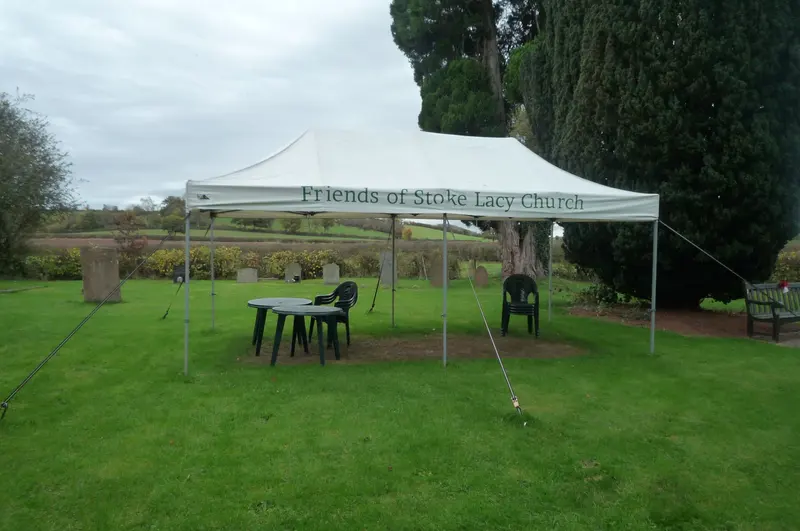
A folding gazebo is light enough to carry to the car and put up in a couple of minutes — and that is exactly why it needs holding down. Its roof is a large flat area on four slim legs, and an unsecured gazebo can be lifted or tipped by a gust. This guide sets out what gazebo makers say about anchoring, using Mastertent (a maker of professional folding gazebos) as the main source, and what the Met Office says about wind and gusts.
Your gazebo’s own instructions come first. If they give a wind speed at which to take it down, take it down at that speed — the advice here can’t make a light frame stronger than it is.
Secure it every time
Mastertent’s FAQ is blunt: “We recommend securing the folding gazebo with either tensioning straps or our weights each time it is used.” It adds that stability “can only be guaranteed if the ground anchoring is adequate”. The calm moment when you put it up is not the moment that matters.
Match the fixing to the ground
Mastertent lists a different fixing for each kind of ground:
- “cast iron gazebo weights for hard ground” — patios, concrete, tarmac;
- “tension straps and pegs for soft ground” — grass;
- “water weight bags, for any terrain, even uneven ground”;
- “concrete weights” for longer periods.
On grass: straps and long pegs
On soft ground, the equivalent of a tent’s guylines is a strap from the top of each leg down to a peg or ground anchor. Mastertent’s own soft-ground set is tensioning straps, a hammer and flat-iron spiral pegs 45.5 cm long. See gazebo tie-down kits — check the length of the anchors in any kit you compare.
On hard standing: weights on every leg
Where pegs can’t go in, weight does the job. Mastertent recommends its 28 kg weights “on all 4 feet of the gazebo” for maximum stability, with 15 kg weights stacked on top as extra. It points out that a larger plate also “enlarge[s] the supporting surface area”. That is one maker’s recommendation for its own professional frames rather than a universal number, but it gives a sense of the scale involved.
Uneven ground: leg bags
Leg weight bags strap to each leg and are filled on site with water or sand. Mastertent’s water bags hold 20 litres (20 kg) each, up to two per leg, and are designed to hang on the leg rather than rest on the ground, so “the full weight is applied directly to the gazebo leg”. When you compare bags, check the fill weight the maker states and how securely the bag attaches.
Every leg, not just one
Mastertent’s weight recommendation is for all four feet of the gazebo, and its water bags allow up to two per leg. If you add side walls, check what your gazebo’s instructions say about anchoring and wind with the walls fitted.
Read the forecast — gusts, not just the average
The Met Office defines a gust as the “maximum three second average wind speed” in a period, and says gusts “can be considerably stronger than the more sustained wind between them”. In the Met Office app, the next-hour summary shows the maximum gust expected in the next hour, and the wind card shows hourly speed, direction and gusts for seven days. If a gust forecast is near the limit in your gazebo’s instructions, plan to take it down. Our guide to reading the wind converts Beaufort forces to miles per hour.
Mastertent’s FAQ says its own gazebos can stay up when gusts are below 100 km/h and the gazebo is properly secured with ground weights or guy ropes. That applies to its professional aluminium frames — a lightweight pop-up gazebo may have a much lower limit, so check yours.
At events and markets
If you’re trading at a market or fair, ask the organiser whether they have rules on gazebo weights — they may have their own, and they know the site. Our events and market stalls page gathers the weights and anchors we list.
Quick checklist
- Check the forecast for gusts and your gazebo’s wind limit.
- Choose the fixing for the ground: straps and long pegs on grass, weights on hard standing, leg bags on uneven ground.
- Anchor all four legs.
- Check the instructions before adding walls.
- Take it down before the wind reaches the maker’s limit.
Sources
- Mastertent: Gazebo weights & fastening (checked 6 November 2026)
- Mastertent: Folding gazebo FAQs (checked 6 November 2026)
- Met Office: How we measure wind (checked 6 November 2026)
- Met Office: How to find wind and gust information in the Met Office app (22 Oct 2026) (checked 6 November 2026)
- Met Office: Beaufort wind force scale (checked 6 November 2026)
Checked 6 November 2026.